Introduction
Bean salad boxes are ideal for lunches and light dinners because they need very little cooking, hold well in the fridge, and provide fiber-rich carbohydrates plus plant-based protein. They are especially useful when the weather is warm or when you want a meal that can be packed without reheating.
Choose Beans, Crunch, and Protein Boosters
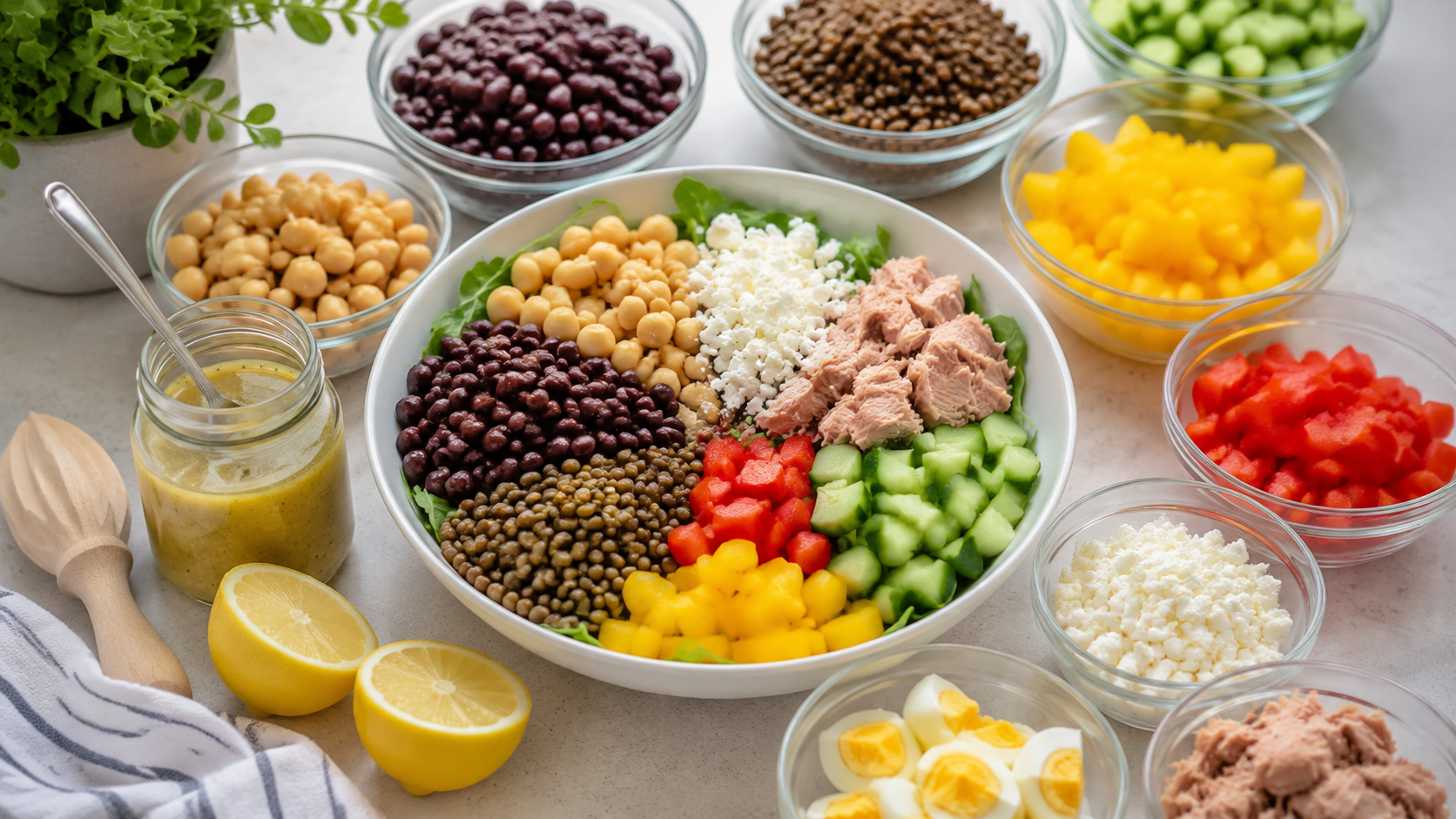
Start with canned chickpeas, black beans, white beans, lentils, or kidney beans. Rinse them well to reduce excess sodium and improve flavor. Add crunchy vegetables such as cucumber, celery, peppers, red onion, shredded carrots, or cabbage. Then add a protein booster: tuna, boiled eggs, feta, tofu cubes, grilled chicken, or extra lentils.
The best bean salads are not just beans in dressing. They need contrast. Beans are soft, so crunchy vegetables and bright acid from lemon or vinegar make the meal feel fresh. A little olive oil helps carry flavor and makes the salad more satisfying.
Make a Five-Minute Dressing
A basic dressing can be made with olive oil, lemon juice or vinegar, mustard, garlic, salt, pepper, and herbs. For a creamy version, use Greek yogurt with lemon and dill. For a spicy version, add chili flakes, cumin, or smoked paprika.
Dress the beans first and let them sit for ten minutes if possible. Beans absorb flavor better than lettuce, so they improve with a little time. This makes bean salad excellent for meal prep.
Turn Salad Into a Full Meal
For lunch, pack the bean salad with whole grain crackers, pita, brown rice, or a small serving of pasta. For dinner, serve it over greens with roasted vegetables or alongside soup. If you need more calories, add avocado, nuts, seeds, or cheese.
Do not skip seasoning. Beans need acid, salt, herbs, and texture to taste like a meal rather than a can of leftovers.
For a Mediterranean box, use chickpeas, cucumber, tomato, parsley, feta, lemon, and olive oil. For a Tex-Mex box, use black beans, corn, peppers, lime, cumin, salsa, and avocado. For a pantry box, use white beans, tuna, celery, onion, mustard, and vinegar. These combinations use the same method but feel like different lunches.
Pack the Lunch Box Correctly
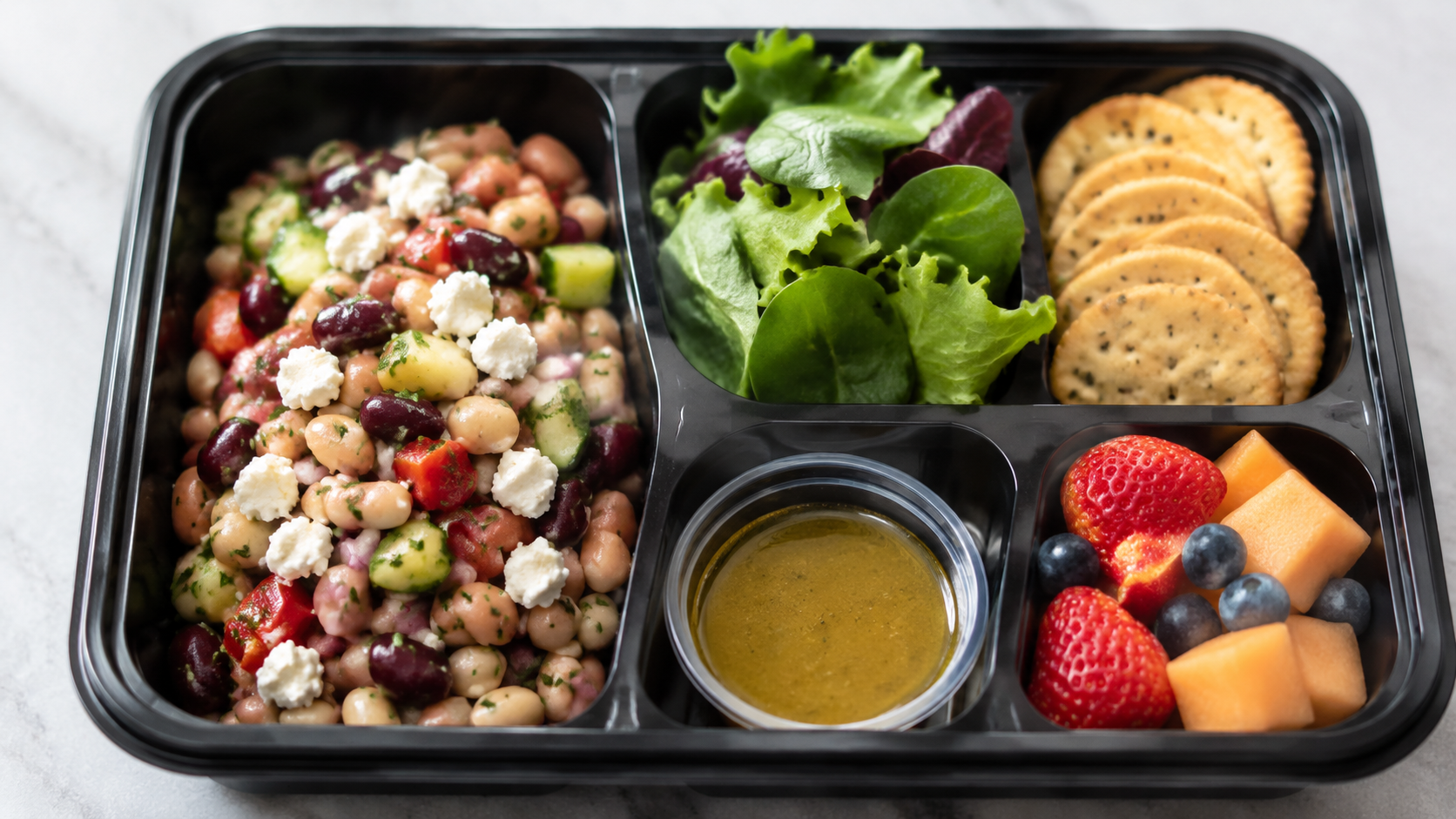
Place the bean salad in the largest section of the container. Keep leafy greens, crackers, or bread separate so they do not get soggy. Add a small fruit, yogurt, or nuts if the meal needs more staying power.
If packing for several days, store the base bean salad in one large container and portion it in the morning. This keeps vegetables crisp and makes it easier to adjust portions. Add herbs right before eating for the freshest taste.
Storage and Safety
Most bean salads keep for three to four days in the refrigerator if stored cold. If adding fish, eggs, or chicken, follow food safety guidelines and keep the box chilled until eating.
Bean salad is also a good emergency dinner. Spoon it onto toast, wrap it in a tortilla, serve it over rice, or add it to greens. If the salad tastes dull after a day in the fridge, refresh it with lemon juice, herbs, black pepper, or a small pinch of salt. Cold meals often need a little extra brightness.
For busy households, keep two cans of beans, one crunchy vegetable, and one dressing base ready every week. That small pantry rule makes lunch easier even when there are no cooked leftovers. It also supports a more balanced meal than relying on crackers or snacks when time is short.
Conclusion
High-protein bean salad boxes are fast, colorful, and affordable. They turn pantry staples into a balanced lunch or dinner with almost no cooking, making them one of the easiest healthy meals to repeat.
Sources
EatingWell Healthy Lunch Recipes https://www.eatingwell.com/recipes/17913/mealtimes/lunch/
BBC Good Food Healthy Salad Recipes https://www.bbcgoodfood.com/recipes/collection/healthy-salad-recipes
Bon Appetit Easy Lunch Ideas https://www.bonappetit.com/gallery/easy-lunch-ideas