Introduction
Rotisserie chicken soup noodle bowls are perfect when you need a warm lunch or dinner fast. A cooked chicken saves time, broth creates comfort, noodles make the bowl filling, and vegetables turn it into a balanced meal. The result tastes slow-cooked even when it comes together quickly.
Build a Quick Soup Base
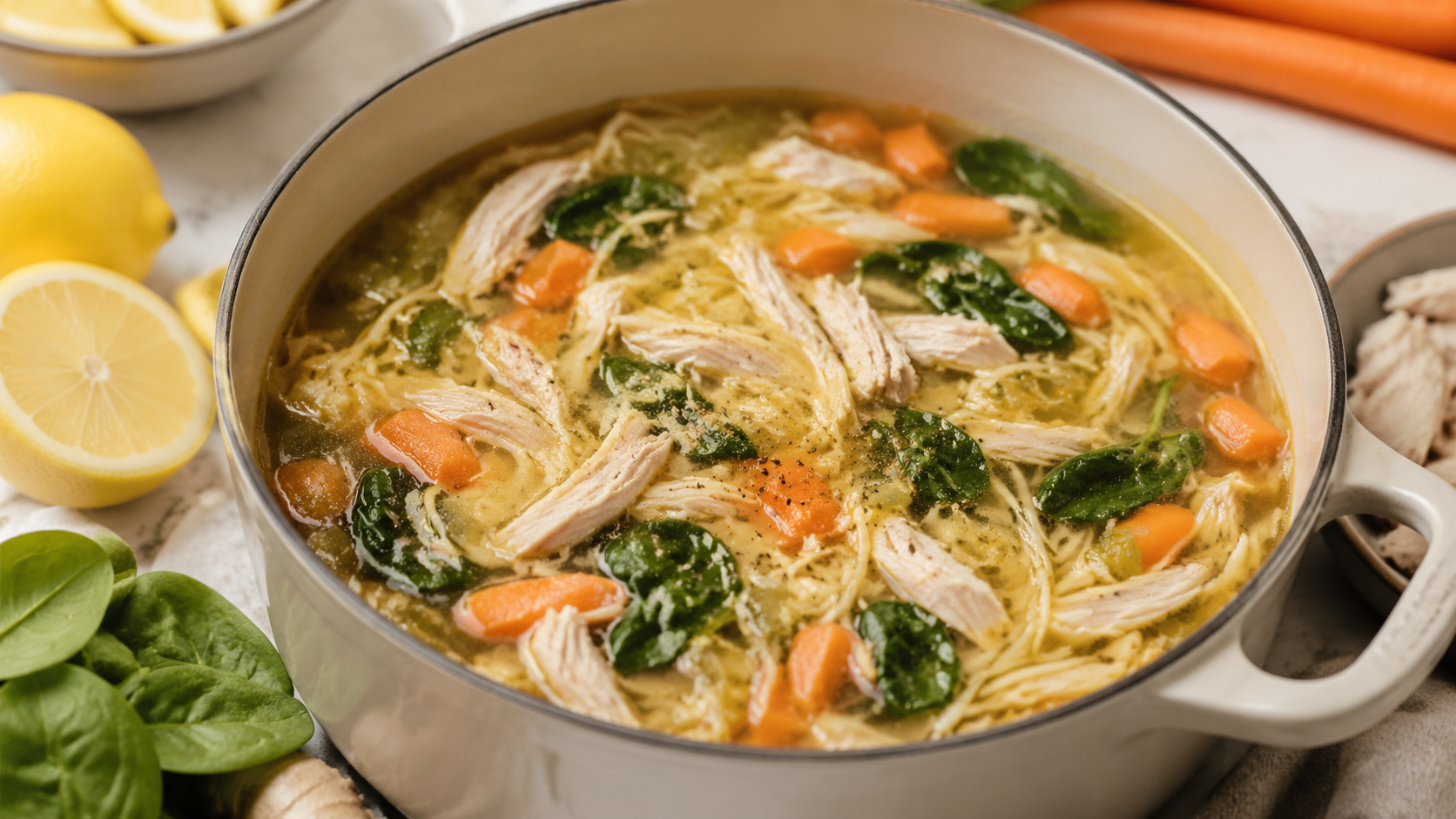
Start with broth, shredded rotisserie chicken, garlic, ginger or onion, and a vegetable such as carrots, cabbage, spinach, mushrooms, or frozen peas. Bring the broth to a simmer and add aromatics first so the soup develops flavor. Then add vegetables and chicken.
The soup base can lean in different directions. Use ginger, soy sauce, and sesame oil for an Asian-style bowl. Use lemon, dill, and celery for a classic chicken soup flavor. Use salsa, cumin, and corn for a Tex-Mex version.
Choose the Right Noodles
Rice noodles, egg noodles, ramen, udon, soba, or small pasta can all work. Cook noodles separately if you are making leftovers, because noodles absorb broth and become soft over time. For a single meal, noodles can cook directly in the broth.
If you want a lighter dinner, use more vegetables and fewer noodles. If you need a heartier lunch, add extra chicken or an egg.
The best shortcut is to separate the roles of the ingredients. Broth carries flavor, chicken brings protein, noodles bring comfort, and vegetables bring color and fiber. When one part is missing, the bowl feels incomplete. Keep frozen vegetables, broth, and noodles in the pantry so a rotisserie chicken can become several meals instead of one dinner.
Add Freshness at the End
Soup tastes better when it has contrast. Finish with scallions, herbs, lime, chili oil, sesame seeds, black pepper, or a handful of spinach. These small additions make a quick soup taste intentional.
Avoid boiling the chicken for too long. Rotisserie chicken is already cooked, so it only needs to warm through. Overcooking can make it dry.
Set Up a Noodle Bowl Topping Bar
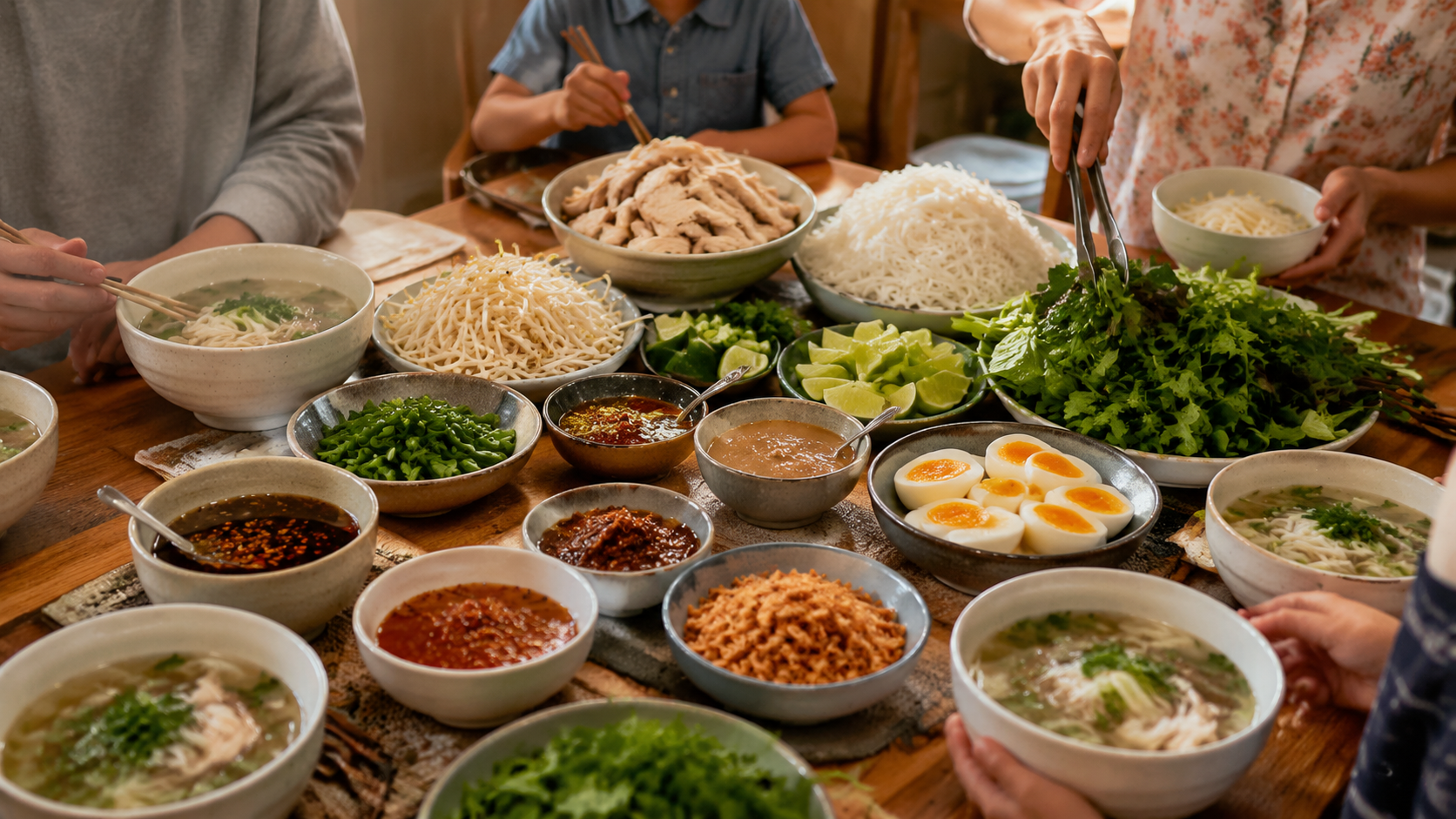
For family dinner, place toppings in small bowls: herbs, lime wedges, chili sauce, shredded carrots, boiled eggs, sesame seeds, and extra greens. Let each person finish their bowl. This keeps the base simple and lets everyone adjust flavor.
For packed lunches, store broth in one container and noodles with chicken and vegetables in another. Combine and heat when ready. This keeps the noodles from soaking up all the liquid.
Storage Tips
Soup base without noodles usually stores well for several days. Freeze extra broth and chicken base if needed. Add fresh noodles or greens when reheating for the best texture.
If the soup tastes weak, add a flavor finisher rather than more salt. Lemon juice, vinegar, chili oil, herbs, miso, soy sauce, or black pepper can wake up the broth. This is especially helpful when using store-bought chicken, which may be seasoned on the outside but mild once shredded into soup.
To make the soup more filling, add an egg, tofu, beans, or extra chicken. To make it lighter, use more greens and fewer noodles. For kids or picky eaters, keep the broth simple and offer toppings separately. This lets one pot serve several preferences without extra cooking.
Conclusion
Rotisserie chicken soup noodle bowls are warm, fast, and flexible. They turn a store-bought chicken into several balanced meals with minimal cooking and very little waste.
The best part is that the method works even when the vegetables change. A handful of spinach, frozen peas, leftover carrots, or mushrooms can all become the vegetable layer.
Sources
Food Network Rotisserie Chicken Dinners https://www.foodnetwork.com/recipes/photos/rotisserie-chicken-dinners
BBC Good Food Quick Soup Recipes https://www.bbcgoodfood.com/recipes/collection/quick-soup-recipes
EatingWell Healthy Soup Recipes https://www.eatingwell.com/recipes/17942/mealtimes/dinner/soup/